EV & Aluminum — PDR Guide
EV & Aluminum Panel Dent Repair Guide
Tesla, Rivian, Lucid, F-150, and the rest of the aluminum-bodied fleet need different PDR technique than steel. Here is what changes — and what to look for in a technician — from Joe Garcia at Dent Evo in Upland, California.
EVs and aluminum-bodied vehicles need a specialist
The body of a 2024 Tesla Model S, a Rivian R1T, a Lucid Air, or a Ford F-150 is not made of the same material as a 2010 Camry. The shift to aluminum — and to the integrated battery, sensor, and high-voltage architecture of EVs — has changed what dent repair looks like on these vehicles.
The technique is different. The tooling is different. The lighting is different. The judgment about what is repairable and what is not is different. A PDR technician who has worked steel for twenty years and never trained on aluminum can damage an aluminum panel by applying the wrong pressure, in the wrong direction, with the wrong tool tip.
Joe Garcia has been doing PDR since 1997. Aluminum work has been a focus at Dent Evo since the F-150 went aluminum in 2015 and the Tesla and Rivian fleets started showing up in volume across Upland, Claremont, Rancho Cucamonga, and the rest of the foothill communities. This guide covers what changes for aluminum and EVs, and how Joe approaches each.
Aluminum vs steel — what changes for PDR
Steel and aluminum behave differently when they get hit, and they behave differently when you try to push them back. Four properties matter most:
Memory
Steel has stronger memory. Within its working range, steel wants to return to its factory shape, and a PDR technician can usually walk it back with predictable pressure. Aluminum has less memory. It deforms more abruptly and resists returning to shape with the same kind of pressure that works on steel.
Hardness
Aluminum used in modern body panels is alloyed for stiffness and strength, but the hardness profile is different from steel. The skin on an aluminum panel can be thinner and harder than it looks. That changes how the rod tip transfers force into the dent.
Work hardening
This is the big one. When aluminum is deformed, the metal in and around the deformation reorganizes at the crystalline level. The damaged area gets harder than the surrounding undamaged metal. If you keep pushing on a work-hardened section the way you would push on steel, the metal cracks instead of moving. The technician has to read the panel and adjust pressure across multiple lighter passes rather than a few heavy ones.
Heat sensitivity
Aluminum responds to heat differently than steel. Heat assist used carelessly on aluminum can change the metal’s structure or damage the paint above it. Some aluminum work is best done cold; some benefits from gentle heat. Knowing when is the difference between a clean repair and a refinished panel.
Practical implication: An aluminum panel takes more time, lighter pressure, and more passes than a steel panel of similar size. The skill ceiling is higher and the margin for error is smaller. This is why aluminum should not go to the lowest bidder.
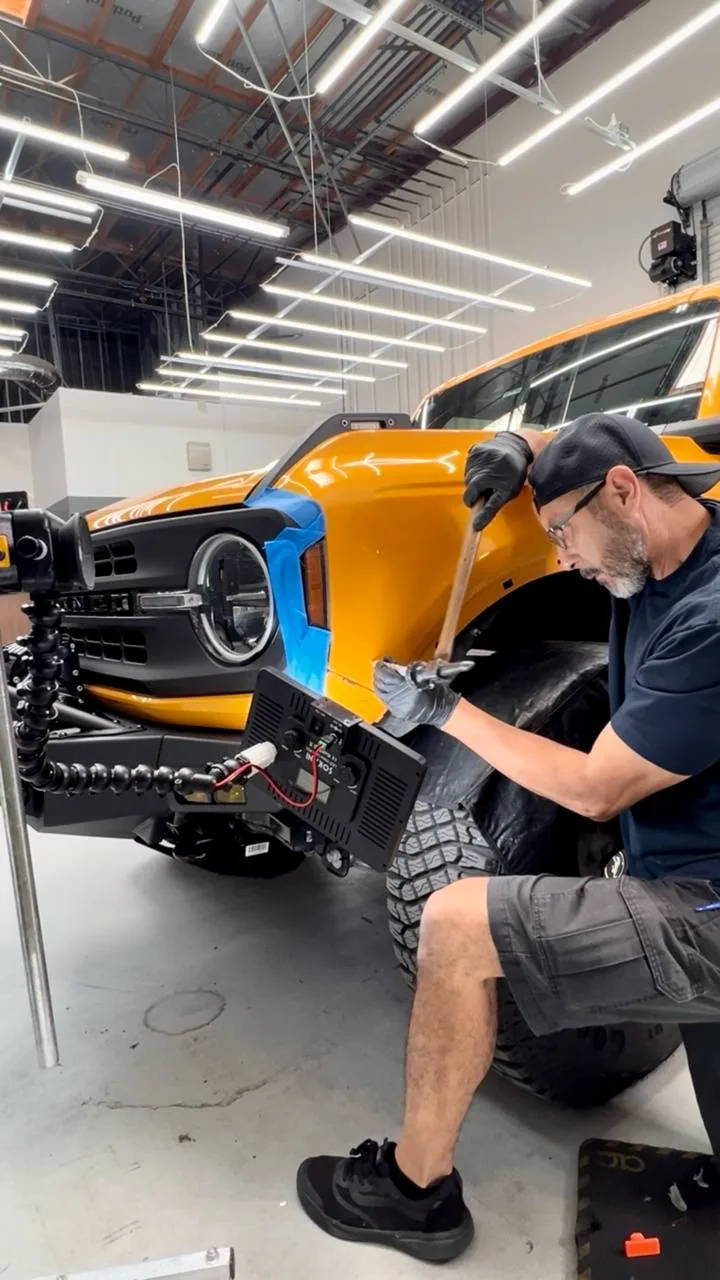
The aluminum-bodied vehicles you should know about
Aluminum has spread across the lineup over the last decade as automakers chase weight reduction for fuel economy and EV range. The list is now long enough that any modern garage probably has at least one aluminum-bodied vehicle in it. The most common we see at Dent Evo:
| Vehicle | Body construction | What this means for PDR |
|---|---|---|
| Tesla Model S / Model X | Full aluminum body | Every panel is aluminum technique. No steel-style pressure anywhere. |
| Tesla Model 3 / Model Y | Mixed aluminum and steel | Doors and hood are aluminum; some structural sections are steel. Identify per panel. |
| Rivian R1T / R1S | Aluminum-intensive throughout | Bed sides, doors, fenders all aluminum. Off-road exposure means more impact dents. |
| Lucid Air | Full aluminum, ultra-thin gauge | The thinnest panel skins in the fleet. Smallest margin for error in pressure. |
| Ford F-150 (2015–present) | Full aluminum body, steel frame | Every exterior panel is aluminum. Truck use means dings come from gear and tailgates. |
| Jaguar I-Pace | Aluminum-intensive EV | Aluminum technique throughout; tight panel gaps require precision finishing. |
| Audi e-tron | Aluminum-intensive EV | Similar to other VW Group aluminum platforms; sensors near body line. |
| BMW i-series | Mixed aluminum, steel, carbon fiber | Per-panel identification matters; some panels carbon, some aluminum. |
| Range Rover (recent) | Predominantly aluminum | Long panels, complex curves, premium paint — high stakes per repair. |
If your owner’s manual lists aluminum panels or your vehicle is on this list, assume aluminum technique is required. A magnet test is a quick check at home — magnets do not stick to aluminum.
What goes wrong when aluminum goes to a non-specialist
An aluminum panel worked by a steel-trained technician without aluminum-specific tools, lighting, or technique can come back worse than it went in. The most common failures:
- Cracks under the paint. Aluminum that has been overdriven can develop micro-cracks invisible from the outside. The first sign is paint cracking weeks or months later as the underlying metal moves.
- Paint failure around the repair area. Heat applied incorrectly, or pressure applied too quickly, stresses the clear coat above the worked metal. The result is hairline cracking, peeling, or fish-eye flaws that show up after the repair is paid for.
- Visible high spots that cannot be walked back. Once aluminum has been pushed past the original surface plane in a work-hardened state, walking it back is much harder than on steel. The panel ends up with a visible high or low that did not exist before.
- Tool marks or backside damage. Aluminum is softer than steel against the wrong tool tip. Improper tooling can leave a mark on the back side of the panel that will show as a small lump on the front.
- Galvanic corrosion risk from cross-contamination. Steel particles embedded in aluminum (from a mixed tool kit) can start corrosion under the paint. This is why proper aluminum shops keep their tools physically separated from steel tools.
A panel that ends up needing body shop work after a failed PDR attempt costs more than a panel that went straight to the right shop. Aluminum is not the place to gamble on technique.
F-150, Tesla, Rivian, Lucid — aluminum needs the right hands. Send a photo, get a real read.
The Dent Evo aluminum process
Aluminum work at Dent Evo follows a different sequence than steel work, on purpose:
- Read the panel under proper light first. A line board is set so every high and low spot reads on the surface. Aluminum dents read differently than steel dents — the metal’s reflective behavior is different, and the lighting setup has to account for that.
- Identify work-hardened zones. Joe maps where the metal is now harder than baseline before any pressure goes on. This determines the order of operations — the harder zones get worked last, with the lightest passes.
- Tool selection per zone. Aluminum tools have different tip profiles, contact areas, and weight than steel-only tools. The right tip for a soft-skin Lucid panel is not the right tip for an F-150 hood. The wrong tip leaves a mark.
- Multiple lighter passes, not fewer heavy ones. Steel can take a heavier hand. Aluminum gets walked back in many small pressures, each verified against the line board, often over a longer working session.
- Final read with paint condition under angle. Aluminum panels are checked for any clear coat stress at the end of the repair. The surface condition at sign-off is the same as the surface condition before the dent — or the work continues.
The repair carries the same satisfaction guarantee as every other Dent Evo job: complete satisfaction or no charge applied.
EV-specific considerations beyond the metal
Aluminum is the headline issue on most EVs, but it is not the only thing that changes. EVs have architecture that conventional vehicles do not, and that architecture affects where PDR can be done safely:
Battery proximity
The battery pack sits below the floor on most modern EVs. The pack’s edge structure can come close to the underside of doors, rocker panels, and rear quarters. PDR access from below is more constrained on EVs than on conventional vehicles, and any work near the battery enclosure needs to respect that boundary. Most dents above the midpoint of a panel are fine. Lower-body damage requires assessment for access.
Sensor placement
Cameras, LIDAR units, ultrasonic sensors, and radar emitters sit in or near body panels on every modern EV — in front fenders, rear quarters, side mirrors, and bumper covers. Removing trim or accessing a panel from behind a sensor housing requires knowing exactly where each unit lives on that platform. The wrong move can disturb a sensor calibration.
High-voltage wiring runs
EV wiring harnesses carry serious voltage and run through doors and quarters in ways that conventional wiring does not. A technician working PDR on an EV door needs to know which interior trim is safe to remove and which is not. This is platform knowledge, not improvisation.
Why Dent Evo is in-shop only
Mobile PDR is a fine model for parking-lot dings on a steel sedan in a controlled environment. On an EV, mobile PDR is harder to justify. The lighting is improvised. The platform-specific knowledge is harder to bring with you. The risk profile around battery proximity and sensor placement is higher in someone’s driveway than in a controlled shop. Joe works in-shop only at 1220 Dewey Way in Upland. Every EV that comes through gets the lighting setup, tooling, and bench access that aluminum and EV work actually needs.
Brand-by-brand — what to know
Each manufacturer’s aluminum strategy plays out differently in the actual vehicles. Short notes on the ones we see most across the Inland Empire:
Tesla
Model S and X are full aluminum — treat every panel as aluminum technique. Model 3 and Y are mixed: doors and hood aluminum, other sections steel. Cybertruck is stainless steel and largely outside conventional PDR. Rear quarter near the charge port sees repeated cable contact.
Tesla dent repair details →Rivian
R1T and R1S are aluminum-intensive throughout. Bed walls on the R1T are vertical aluminum panels and are common dent targets from cargo and gate impact. Off-road exposure means more debris and brush contact than a typical SUV. Access is straightforward when battery clearance is respected.
Rivian dent repair details →Lucid Air
The thinnest aluminum body skin in the modern EV fleet. Engineered for weight savings, which means dents can appear from lighter impacts. Pressure has to be the lightest in the lineup, and panel-gap precision at sign-off is critical — Lucid’s tolerances are tight enough that a slightly off panel reads as off.
Lucid dent repair details →Ford F-150 (2015+)
Every exterior panel is aluminum. Common dent locations are the bed walls, the tailgate, the hood from cargo and tools, and door dings from work-site contact. The F-150 is one of the most-PDR’d aluminum vehicles in the country, and the technique is well-developed.
F-150 PDR estimate →Behind the Panel
That dent looks simple. Until you see what’s behind the panel.
What looks like a small surface ding sits in front of a precisely engineered structure. PDR technicians work blind — navigating every brace, bracket, and reinforcement to restore the panel without a trace.
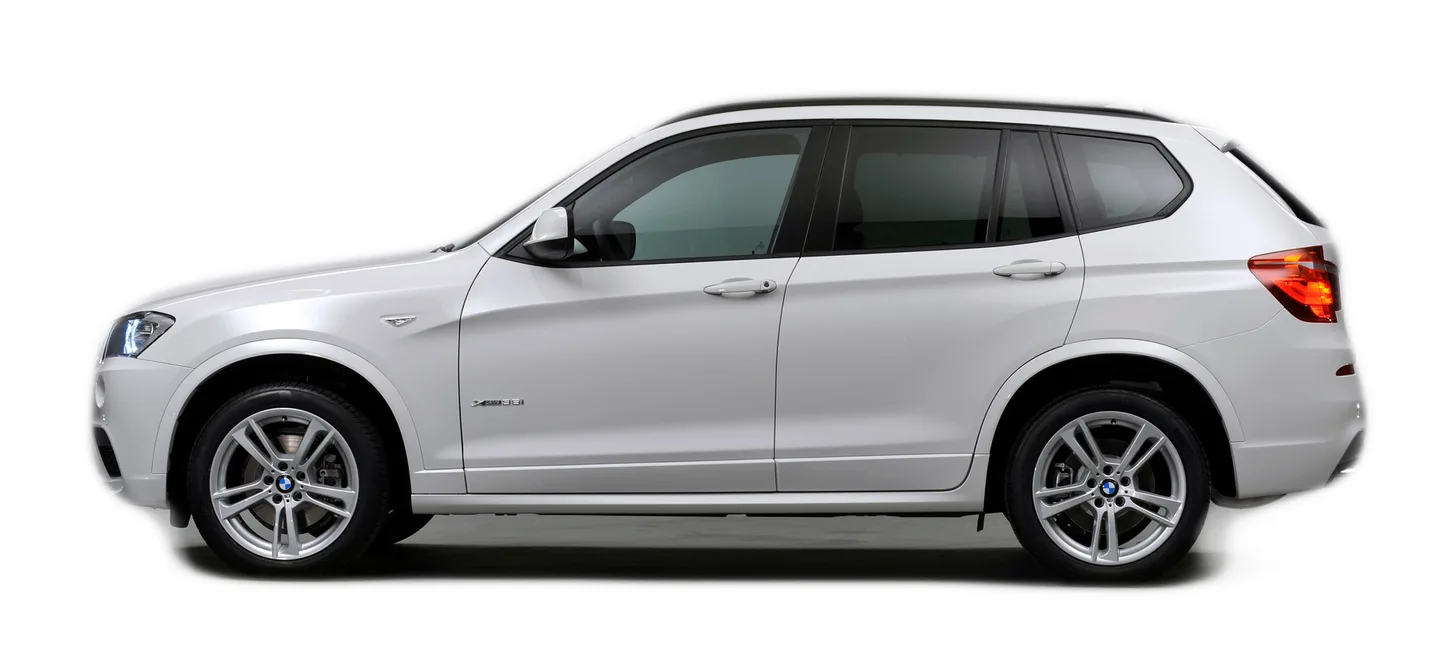
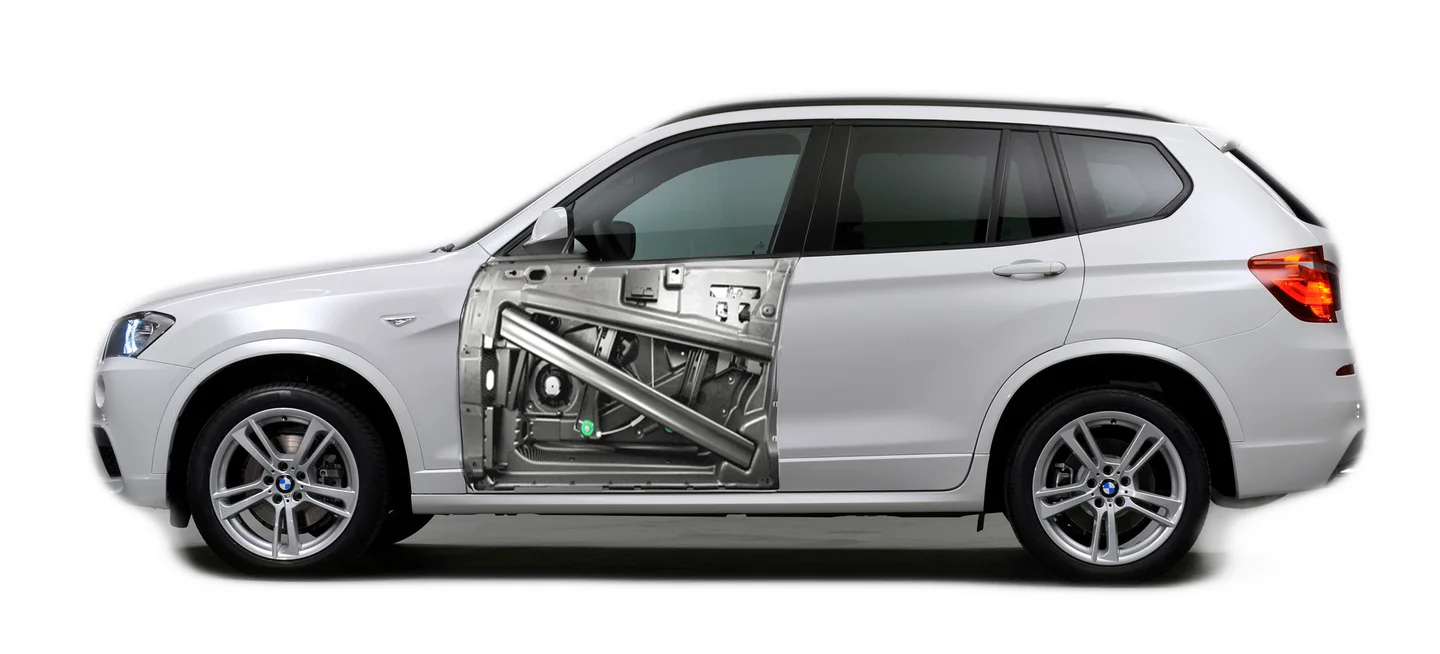
← drag to reveal →
Why evaluation matters more on aluminum
On steel, an experienced technician can often quote from photos with reasonable confidence. The metal is forgiving enough that small variations in damage don’t change the repair path much.
On aluminum, evaluation does more work. The same dent shape on a Tesla Model 3 door, a Rivian R1T fender, and a Lucid Air rear quarter is three different repairs — different metal thickness, different work-hardening risk, different access. Before quoting an aluminum dent, Joe wants the panel under proper lighting, with hands on the metal, reading the surface from multiple angles. The photo evaluation is a first cut. The in-shop read is what produces the actual quote.
This is the part where evaluation-driven PDR matters most. A quote that skips the panel read on aluminum is a guess, and an aluminum guess that goes wrong is expensive to fix.
What this looks like in practice: Send photos for the first read. If the dent looks like a clean candidate, schedule the in-shop evaluation for a final quote. If the photos show borderline or complex damage, the in-shop read happens before any commitment. No work starts until the path is clear.
Frequently asked questions
Can any PDR technician work on my Tesla, Rivian, or Lucid?
No. Aluminum technique is its own skill set. A technician trained only on steel can damage an aluminum panel by applying steel-style pressure. Ask directly whether the technician has dedicated aluminum tools, aluminum experience on your specific platform, and a track record on the kind of damage you have. If the answer is vague, keep looking.
Is PDR safe near the EV battery?
Yes, when done correctly. The battery pack is sealed and protected. PDR works the body panel from inside the door cavity or other access points — not the battery. Most door, hood, fender, and quarter-panel dents are completely separated from the battery enclosure. Lower-body damage near the battery edge needs to be evaluated for access on a per-vehicle basis, but the work itself does not touch the battery.
Will PDR void my Tesla, Rivian, or Lucid warranty?
No. PDR is a mechanical repair to a body panel. It does not touch the powertrain, the battery, the software, the sensors, or anything covered by the manufacturer’s warranty. The repair leaves the factory paint intact and is invisible to the manufacturer’s service system.
How do I know if my vehicle’s panels are aluminum?
Quick magnet test — magnets do not stick to aluminum. The owner’s manual sometimes lists panel materials. If your vehicle is a Tesla Model S or X, Rivian R1T or R1S, Lucid Air, Ford F-150 (2015 or newer), Jaguar I-Pace, or Audi e-tron, assume aluminum. Tesla Model 3 and Y are mixed — doors and hood are aluminum.
Why is the Lucid Air harder to work than other aluminum vehicles?
The panel skin is thinner. Lucid engineered the Air for maximum range, which meant the body panels are at the thin edge of what aluminum can be made into. Thinner panels deform from lighter impacts and require lighter pressure during PDR. The margin for error in tool selection and pressure is the smallest in the modern aluminum fleet.
Does Dent Evo do mobile PDR for EVs?
No. Joe works in-shop only at 1220 Dewey Way Suite A in Upland. EV and aluminum work needs proper lighting, dedicated tooling, and a controlled environment that mobile setups cannot consistently provide. The shop is set up for the work; a driveway is not.
What should I do first if I get a dent on my EV or aluminum vehicle?
Take three photos — one straight on, one at a 45-degree angle, one close-up of the deepest point in good light. Send them through the free photo evaluation. Get an honest read on whether the damage is PDR or body shop before contacting the dealer or insurance. The path from photo to in-shop quote is fast, and the evaluation is free.
Send Joe a photo of the damage
Aluminum and EV panels deserve a careful first read. Send a few photos and we’ll tell you whether it’s a clean PDR candidate, a borderline case, or something that needs body shop work — before any commitment.
1220 Dewey Way Suite A, Upland, CA 91786